Owner Earnings
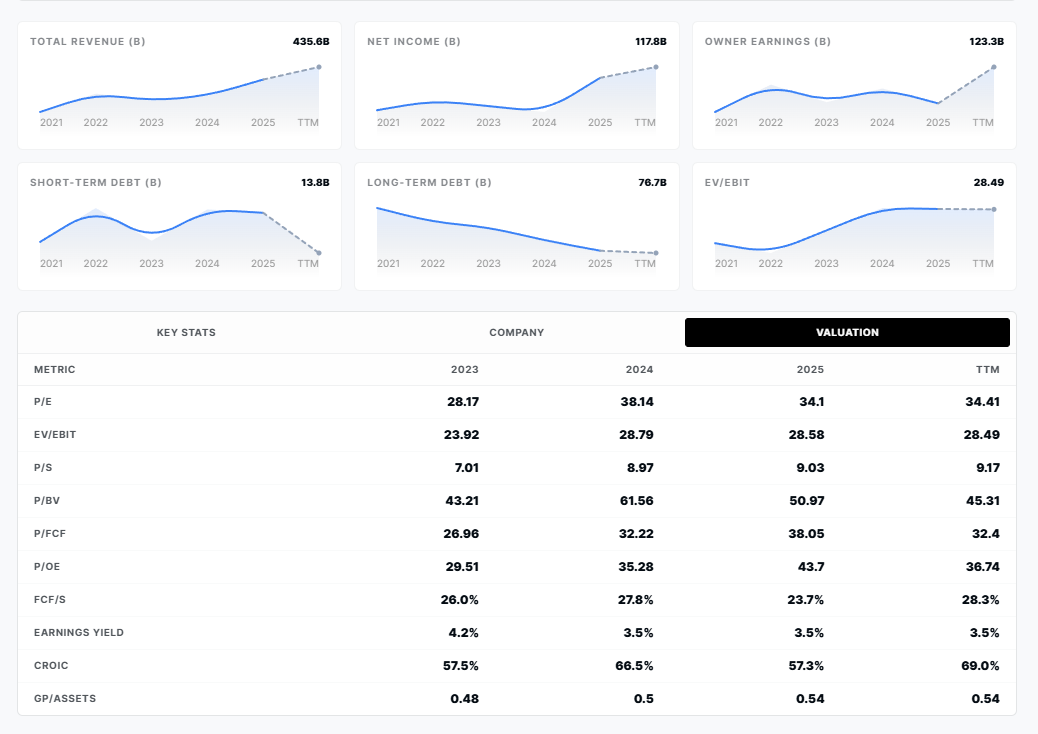
Warren Buffett's favorite metric for determining the true profitability of a business—cutting through the noise of GAAP accounting to reveal actual cash generation.
"These represent (a) reported earnings plus (b) depreciation, depletion, amortization, and certain other non-cash charges... less (c) the average annual amount of capitalized expenditures for plant and equipment..."
The Origin Story
In his 1986 Shareholder Letter, Warren Buffett introduced the world to "Owner Earnings." He argued that standard accounting metrics like Net Income often failed to reflect the economic reality of a business.
Buffett realized that not all earnings are created equal. Some companies require massive capital injections just to stay in business (inflationary capex), while others can grow without spending a dime. GAAP accounting treats them similarly, but Owner Earnings separates the compounders from the capital traps.
True Cash Flow
Focuses on cash available to owners.
Conservative
Adjusts for maintenance capex.
The Owner Earnings Formula
While similar to Free Cash Flow, Owner Earnings makes a specific distinction regarding Capital Expenditures. Here is how you calculate it step-by-step.
Net Income
Start with reported Net Income from the income statement. This is the GAAP baseline for profitability.
D&A
Add back Depreciation and Amortization. These are non-cash accounting charges that reduce reported income but don't cost actual cash.
Maintenance Capex
Subtract only the capital expenditures required to maintain current volume. Growth capex is considered an investment, not a cost.
Working Capital
Adjust for changes in Working Capital. If a company needs more inventory to sell the same amount of goods, that's a cash outflow.
Why is "Maintenance Capex" so hard to find?
Companies rarely break out Maintenance vs. Growth Capex in their filings. This is where the art of valuation comes in. Investors often use Depreciation as a proxy for maintenance capex, or calculate it based on asset turnover ratios. See more on Investopedia's guide to Capex.
Metric Showdown
Why Buffett prefers Owner Earnings over standard accounting metrics.
| Feature | Net Income (GAAP) | Free Cash Flow | Owner Earnings |
|---|---|---|---|
| Cash Focus | No (Accrual based) | Yes | Yes |
| Capex Treatment | Depreciation (Historical) | Total Capex (Growth + Maint) | Maintenance Only |
| Growth Penalty | None | Penalizes high growth | Rewards efficient growth |
| Manipulation Risk | High | Medium | Low |
Putting it to Work
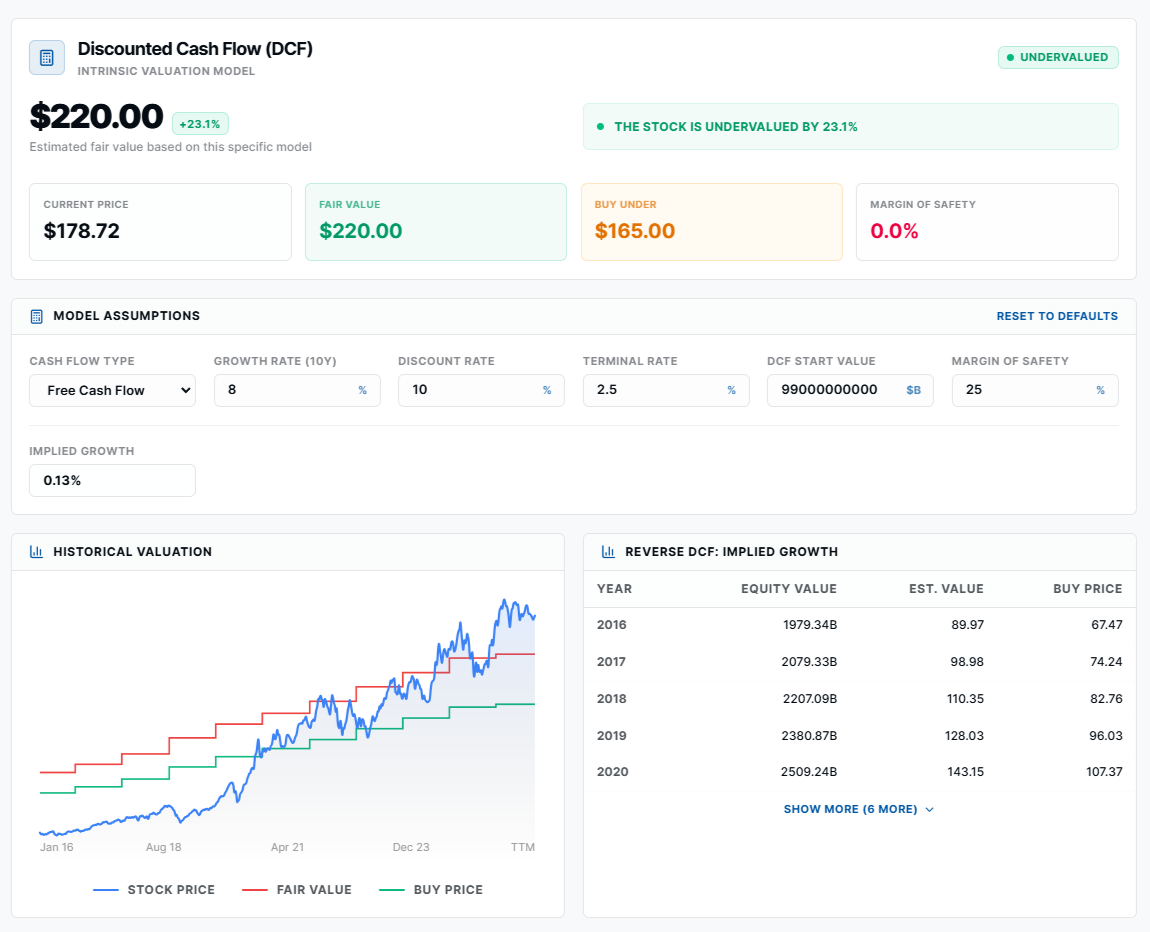
Owner Earnings isn't just a theoretical concept. It is the primary input for the most robust valuation models available. At Old School Value, we use Owner Earnings as the "Cash Flow" input for our Discounted Cash Flow (DCF) models to ensure we are valuing the business based on its sustainable economic power.
Input for DCF
Replace standard FCF with Owner Earnings to avoid penalizing companies investing heavily in growth.
Quality Screening
Screen for companies where Owner Earnings > Net Income. This often signals high-quality accounting.
Stop Guessing. Start Valuing.
Get instant access to Owner Earnings calculations for 40,000+ stocks. See the true value of your portfolio today.